Damage and loss appraisals.
Assessment of condition, prior value, and potential loss in value after damage, theft, or destruction.
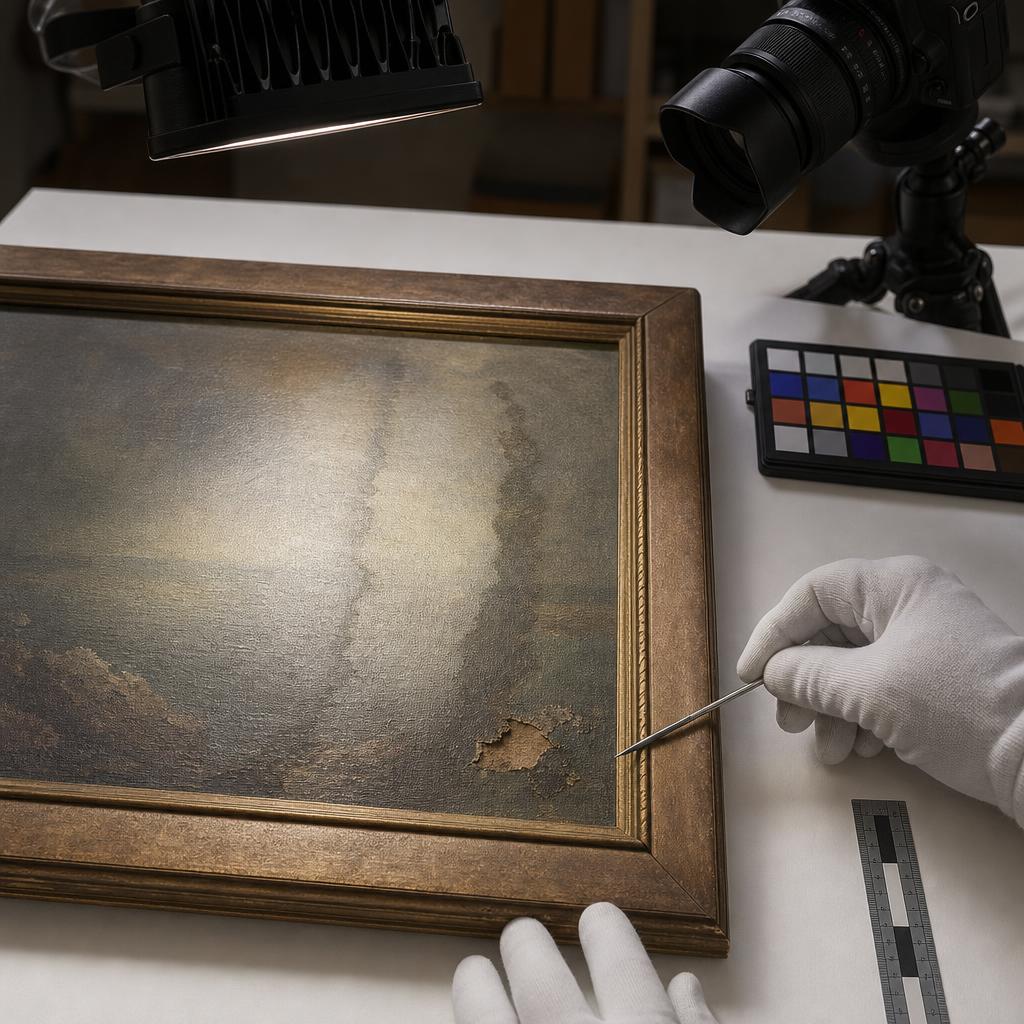
When the unexpected occurs
Physical damage to fine art—whether from transit, environmental factors, or accidents—can have a complex impact on market value. An artwork may be repaired, but it may still suffer a loss in value due to the history and extent of the damage.
A damage and loss appraisal systematically documents the state of the artwork before the incident, the nature of the damage, and the resulting change in market value. This independent analysis is distinct from a conservator's treatment proposal or an insurance adjuster's settlement offer.
What the report records
A damage and loss Appraisal Report provides a formal record of the incident's impact on value. It explicitly details:
- The verified or assumed condition of the artwork immediately prior to the incident.
- The observed condition of the artwork following the damage.
- The market value prior to the damage (often a retrospective opinion based on secondary evidence).
- The estimated market value after damage, accounting for potential conservation and inherent loss in value.
Loss of value (diminution) and conservation
Even after successful professional conservation, an artwork may not command the same price it would have in pristine condition. This difference is known as diminution in value. The appraisal analyzes market data for comparable artworks with similar condition histories to assess this potential loss.
We rely on qualified conservators to provide treatment opinions and cost estimates. The appraiser's role is strictly to determine the market value implications of the damage and the subsequent repair, not to dictate conservation methodology or provide treatment-cost expertise.
Total loss and retrospective opinions
In cases of total loss (such as severe fire, destruction, or theft), a physical inspection is impossible. In these scenarios, a retrospective value opinion may be possible relying entirely on secondary evidence.
This requires historical documentation such as prior appraisals, condition reports, detailed photographs, and purchase invoices. The appraisal proceeds with explicit assumptions regarding the artwork's existence and condition prior to the loss, and all limitations of this approach are clearly disclosed in the report.
Jurisdiction and limitations
Clients must confirm intended-use requirements with their insurer, broker, or legal counsel. Policies vary widely regarding how diminution in value is handled and what evidence is required to support a claim.
Not an insurance guarantee or adjusting service: Artpraisal is not an insurer or a loss adjuster. We do not interpret insurance policy terms, decide coverage or liability, direct settlement outcomes, or guarantee that an insurer will accept the diminution in value.
Not authentication or legal advice: The report identifies the source and status of the stated attribution and discloses material assumptions. Artpraisal does not authenticate artworks or issue certificates of authenticity. An appraisal also does not prove title, guarantee transaction outcomes, clear artworks for export, or provide legal or tax advice.
Reviewed by Artpraisal · Responsible organization: MONDOIR L.L.C-FZ